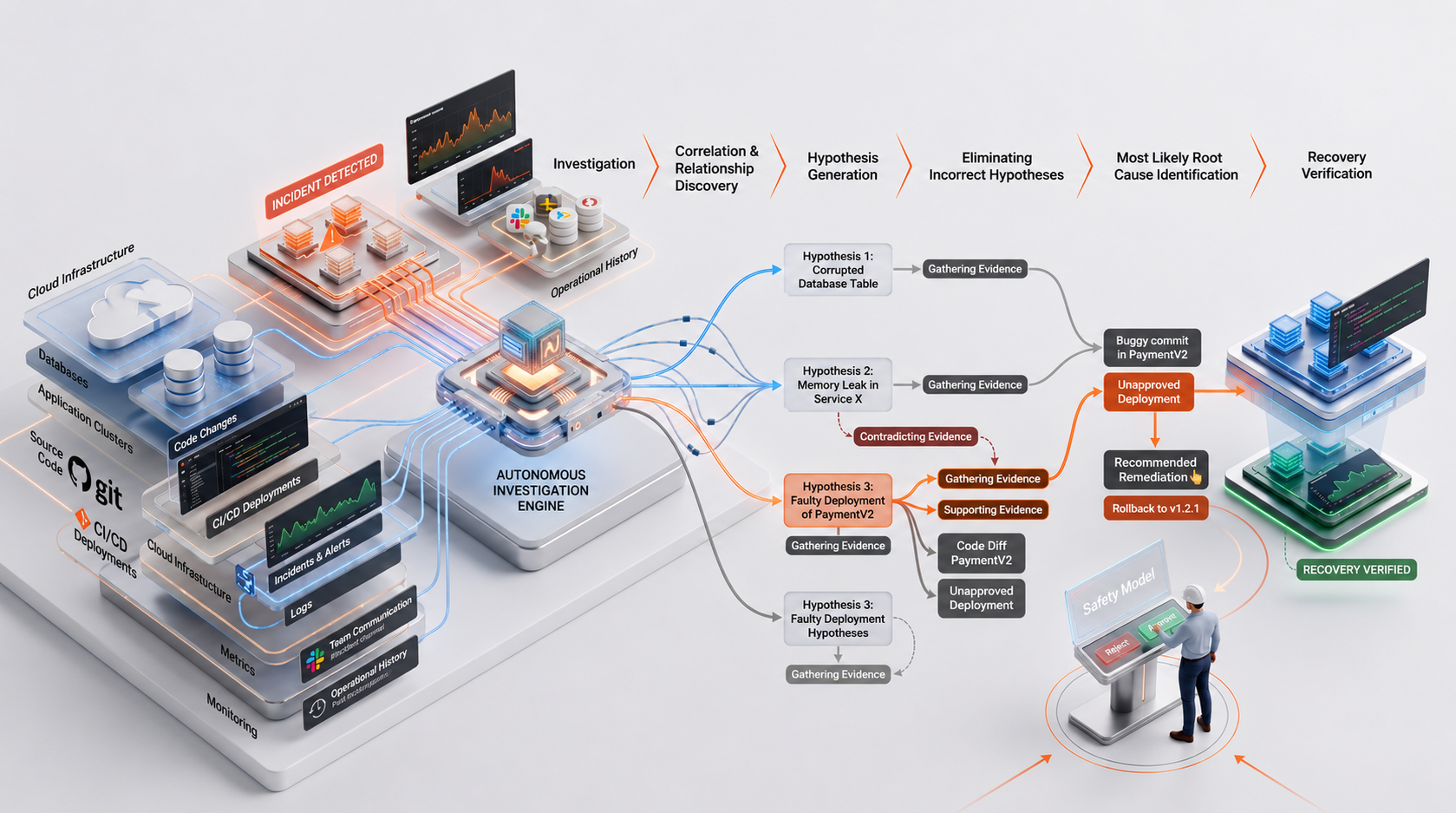
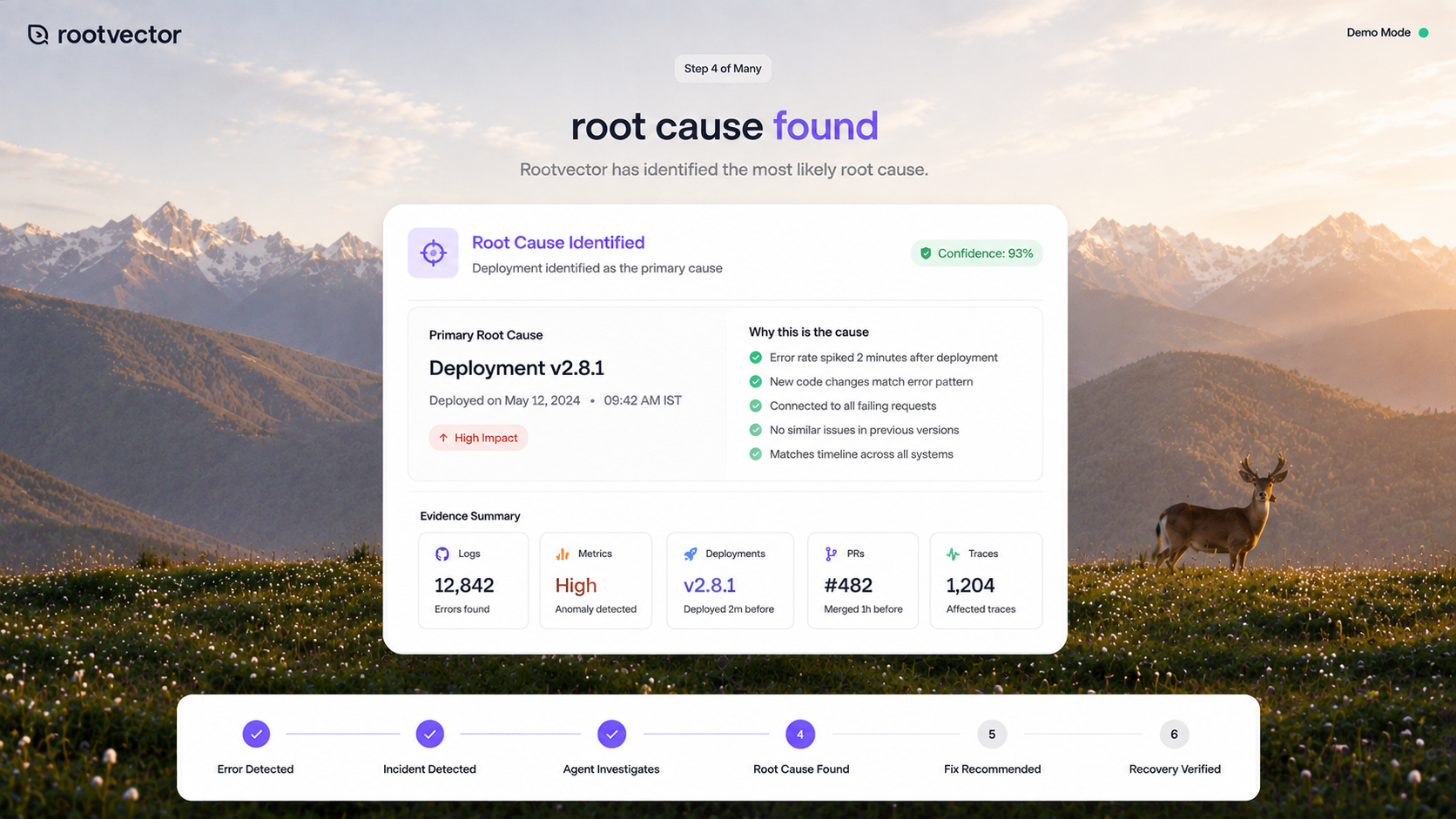
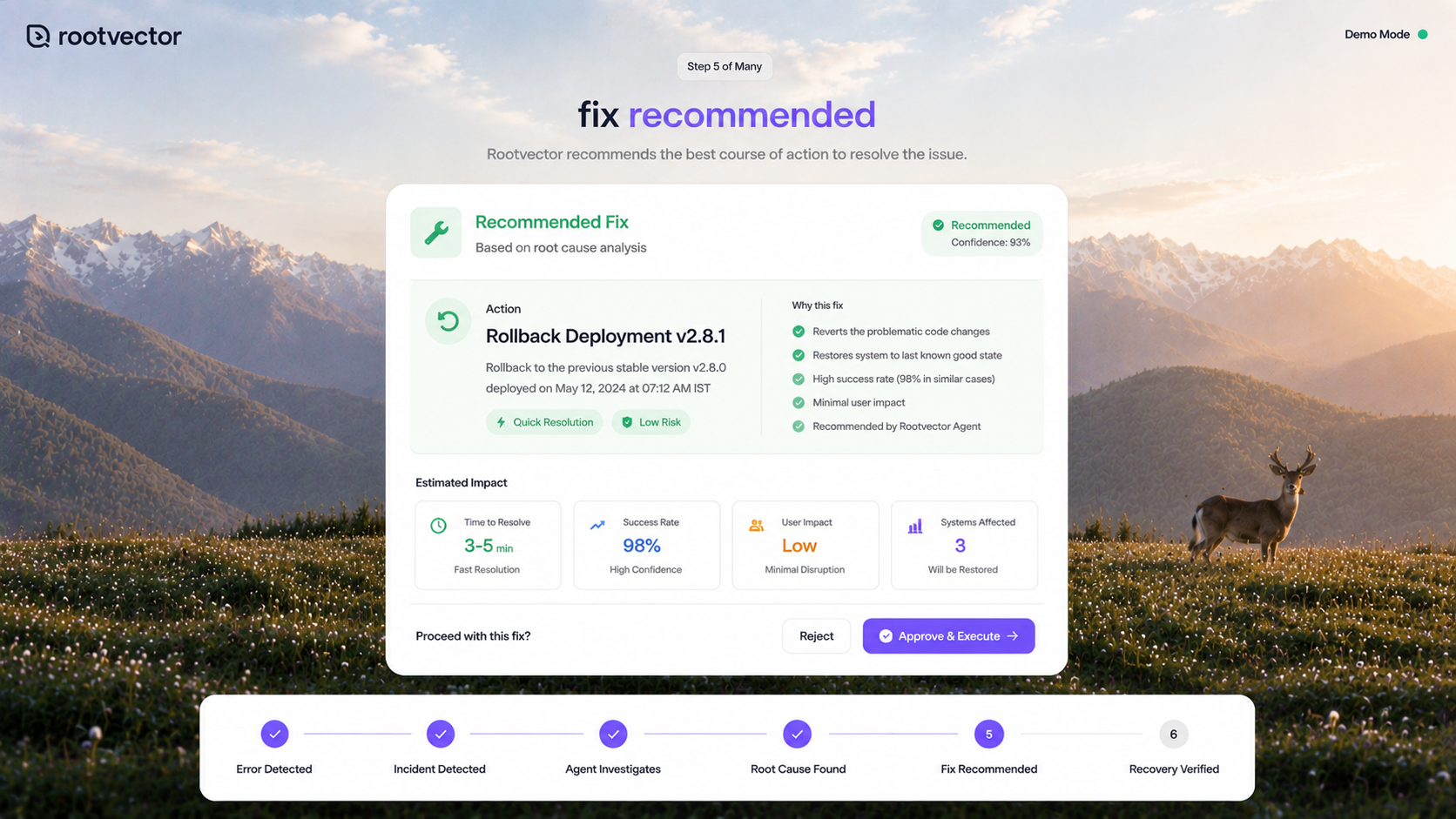
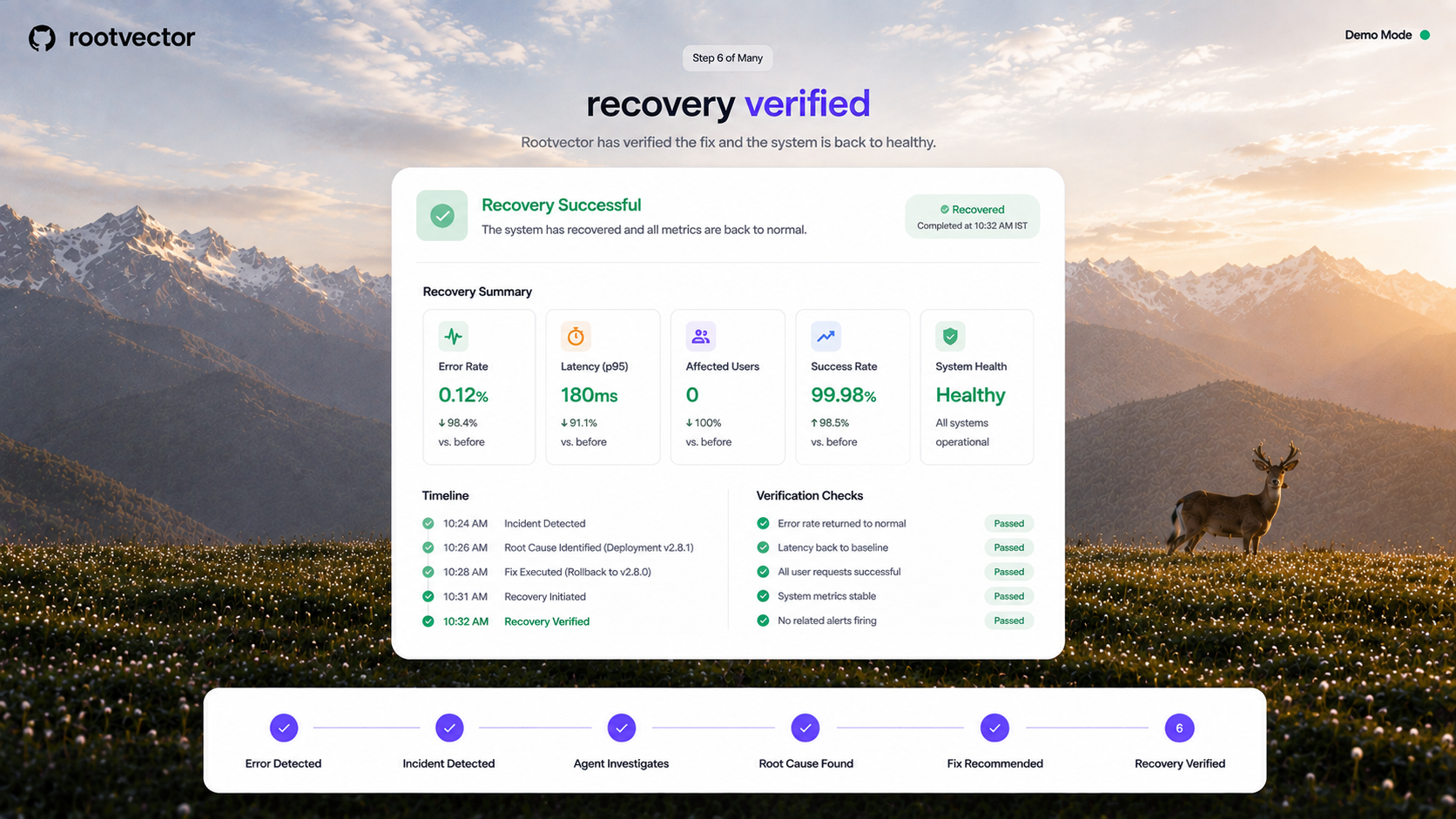
RootVector is an autonomous incident-investigation agent that traces production failures across logs, metrics, deployments, source code and team chatter — then returns a root cause with evidence, a confidence score, and a human-approved fix.
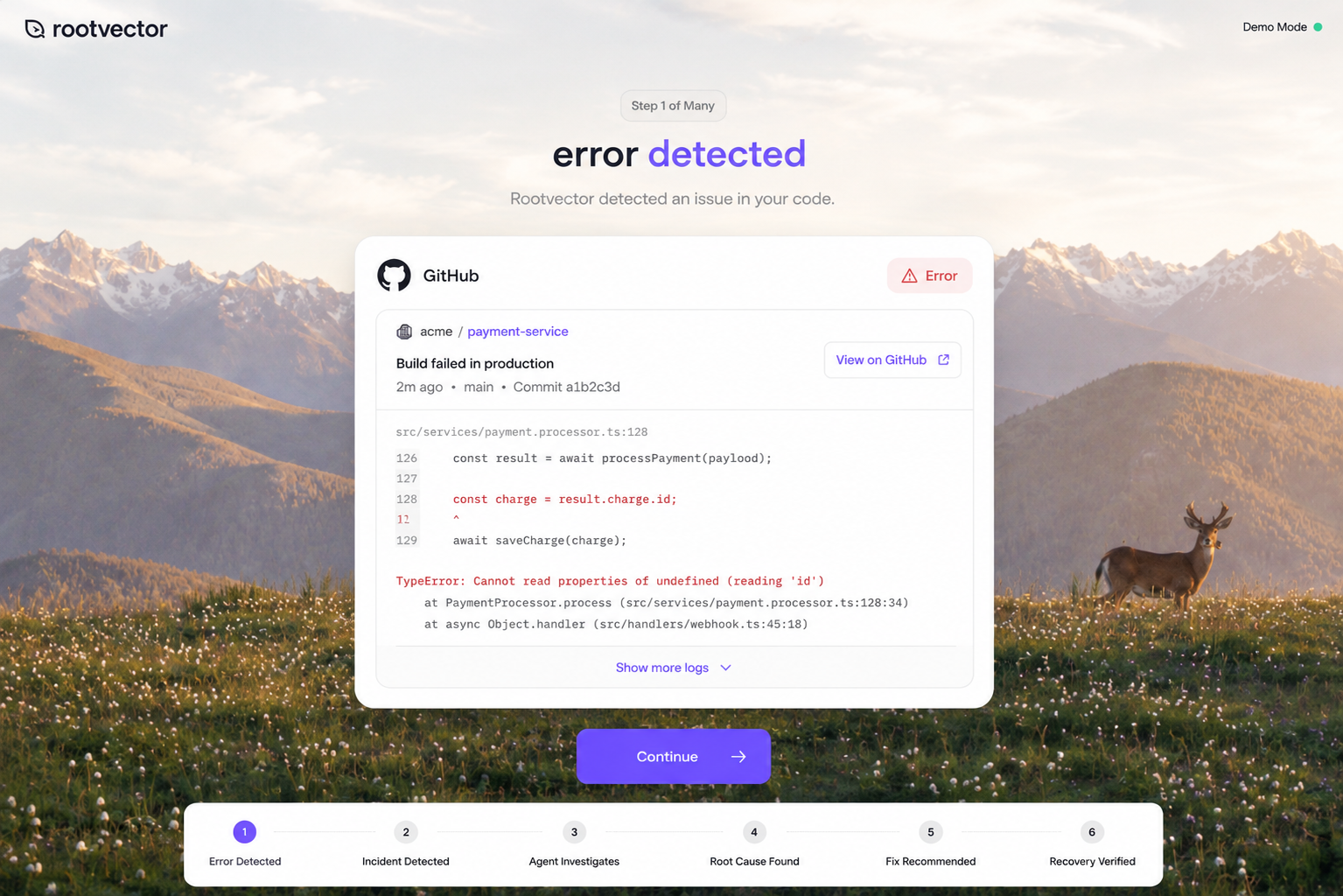
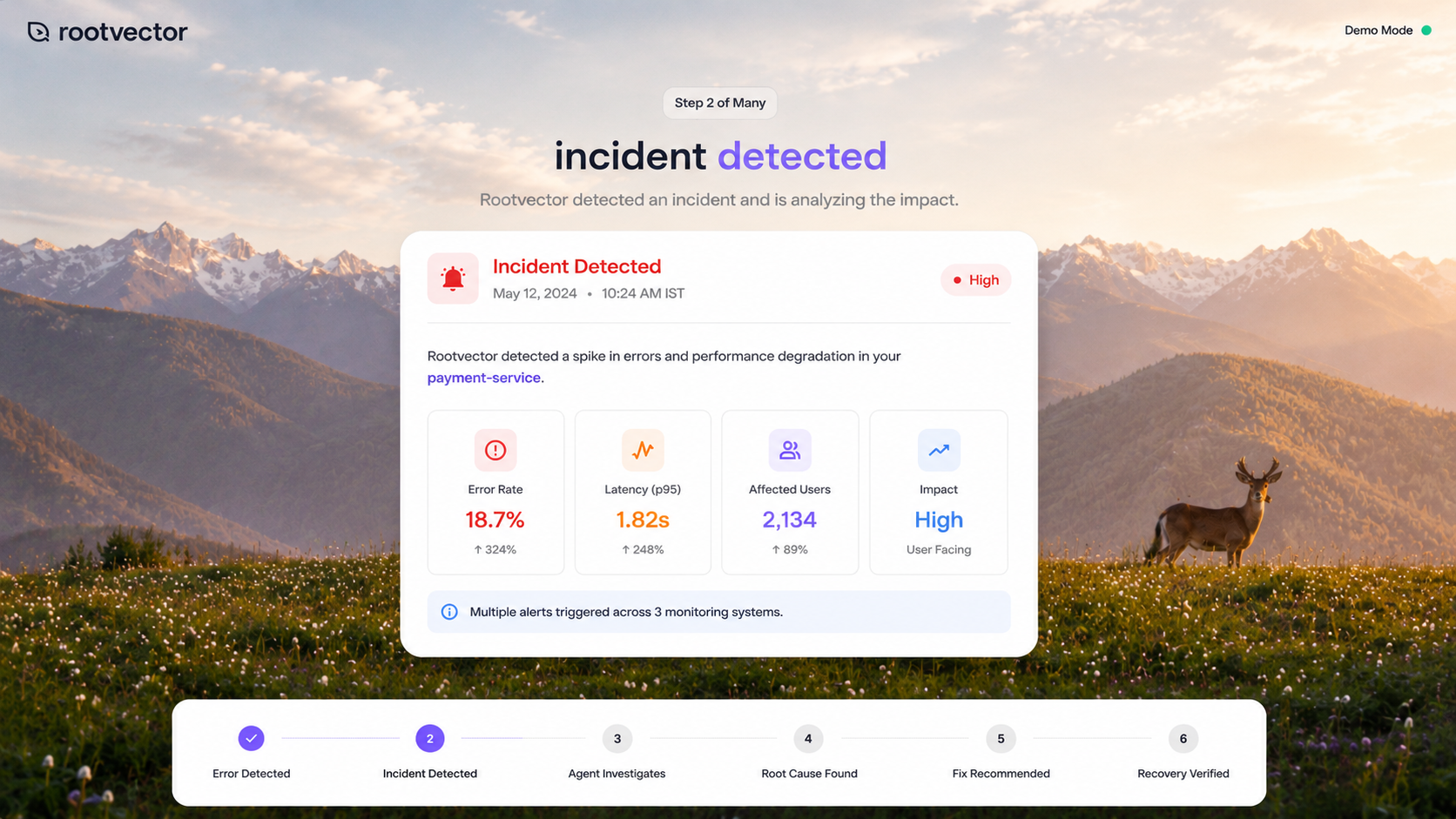
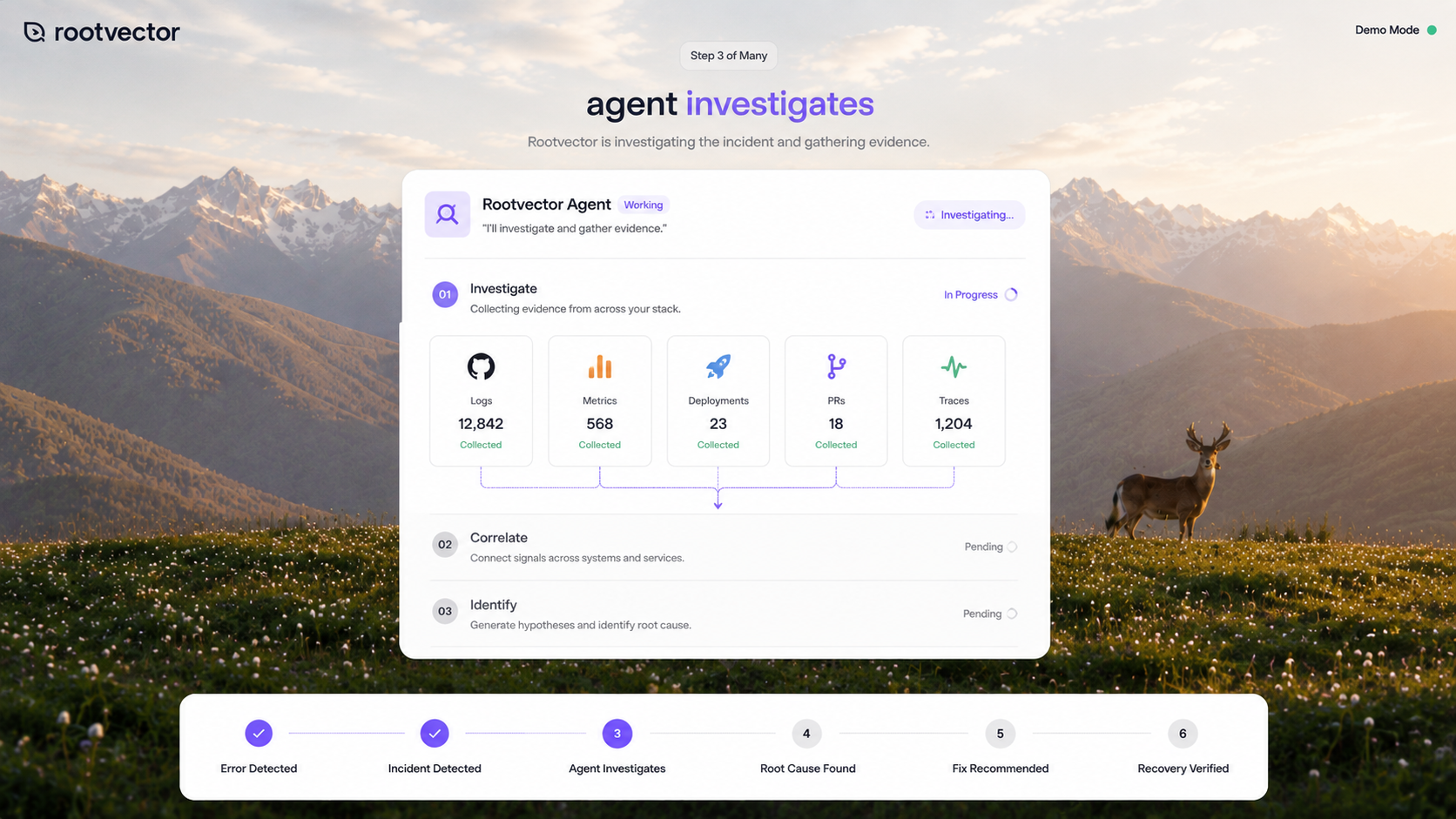
payment-service v2.8.1 under high traffic.Six guided steps — from the moment an error is detected to a human-approved fix and verified recovery. No setup, no sign-up. Just press play.
Trusted by teams where downtime isn't an option
The real cost of an incident isn't just downtime. It's the engineers who dropped everything, the customers who were impacted, and the roadmap that keeps slipping — while one person stitches logs, deploys, GitHub, Slack and past incidents together by hand for 30–60 minutes.
RootVector isn't “chat with your logs.” You hand it an incident and it runs the whole investigation itself — then stops for your approval before doing anything risky.
Error rate up, latency up, orders down — real or simulated. You click Investigate.
It builds a plan and calls real tools — logs, deploys, GitHub, Slack, past incidents — step by step.
It forms competing hypotheses and gathers evidence for and against each, ruling them in or out.
Deployment → code change → error pattern → discussion → precedent, each with a confidence score.
It proposes a remediation — like a rollback — but never executes without an explicit human OK.
After the fix, it re-checks the metrics to confirm the incident actually resolved.
RootVector investigates production incidents autonomously, connects the dots, and gets you back to green — faster.
RootVector is connecting related signals and building a causal graph.
From your logs, metrics, deployments and code — through autonomous investigation, competing hypotheses and evidence — to a human-approved fix and verified recovery, all in one view.
The full loop — from signal to autonomous investigation to a human-approved fix and verified recovery.
Vector is a living model of your production environment — built from your incidents, your systems and your team. It reasons across telemetry, deployments, code and history, and challenges its own conclusions before it shares them.
Explore the appEvery relevant signal your team has ever produced.
Telemetry, deployments, code and incident history.
An adversarial agent tests conclusions before sharing.
The model gets smarter with each incident it sees.
These aren’t production statistics — they’re results from running RootVector against a labelled evaluation set, including deliberately ambiguous incidents where the right answer is “insufficient evidence,” not a confident guess.
RootVector took our worst 45-minute payments incident and handed us the root cause, the evidence, and a rollback to approve — in under a minute. It's the difference between fighting a fire and reading the report.
Put an autonomous agent on your incidents — with evidence, confidence scores, and a human always in the loop.